
Description
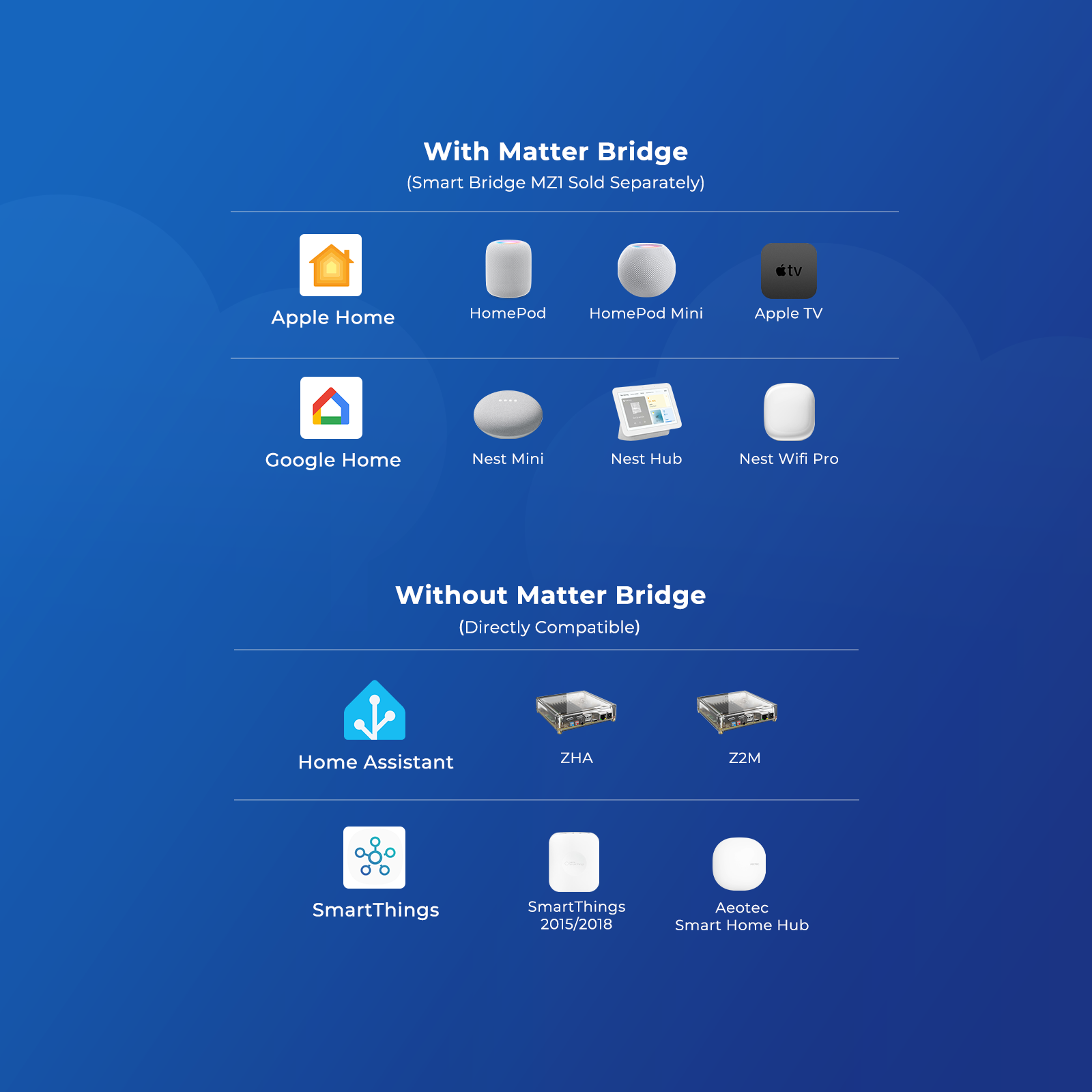
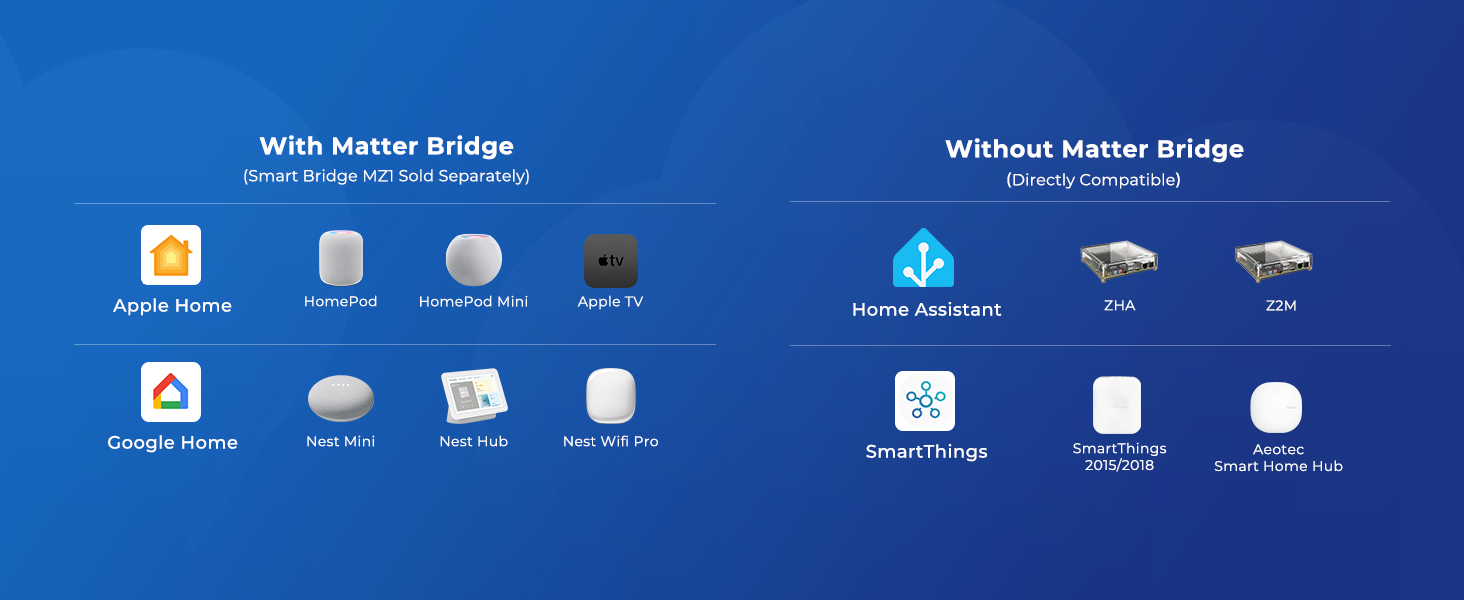
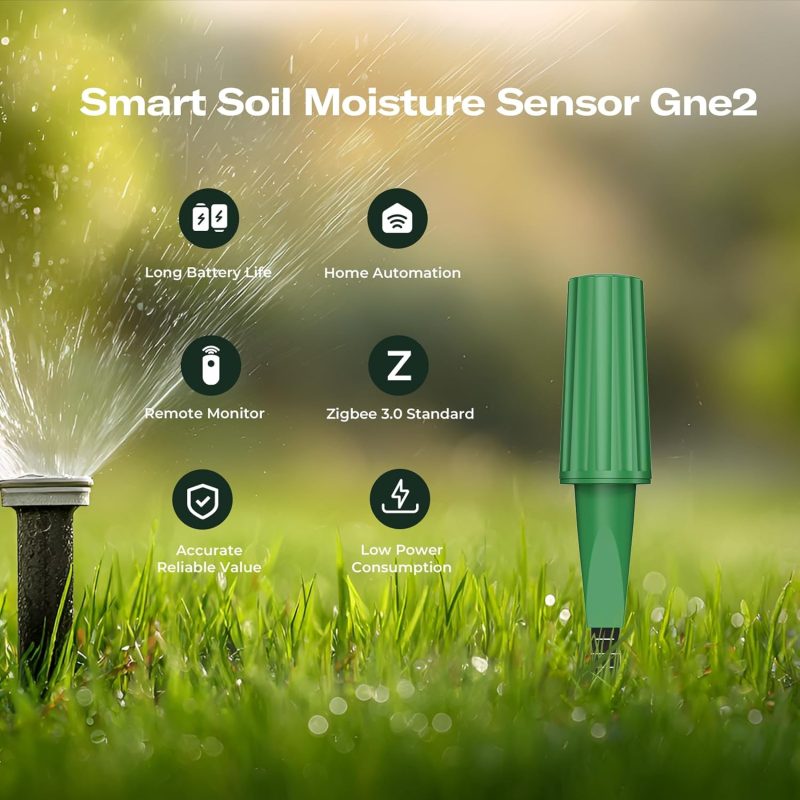
- Zigbee Hub Required: Compatible with standard Zigbee 3.0, including Home Assistant (ZHA & Z2M) and SmartThings Aeotec. A Zigbee Hub is needed for optimal performance. NOTE: Not compatible with Alexa Echo Devices.
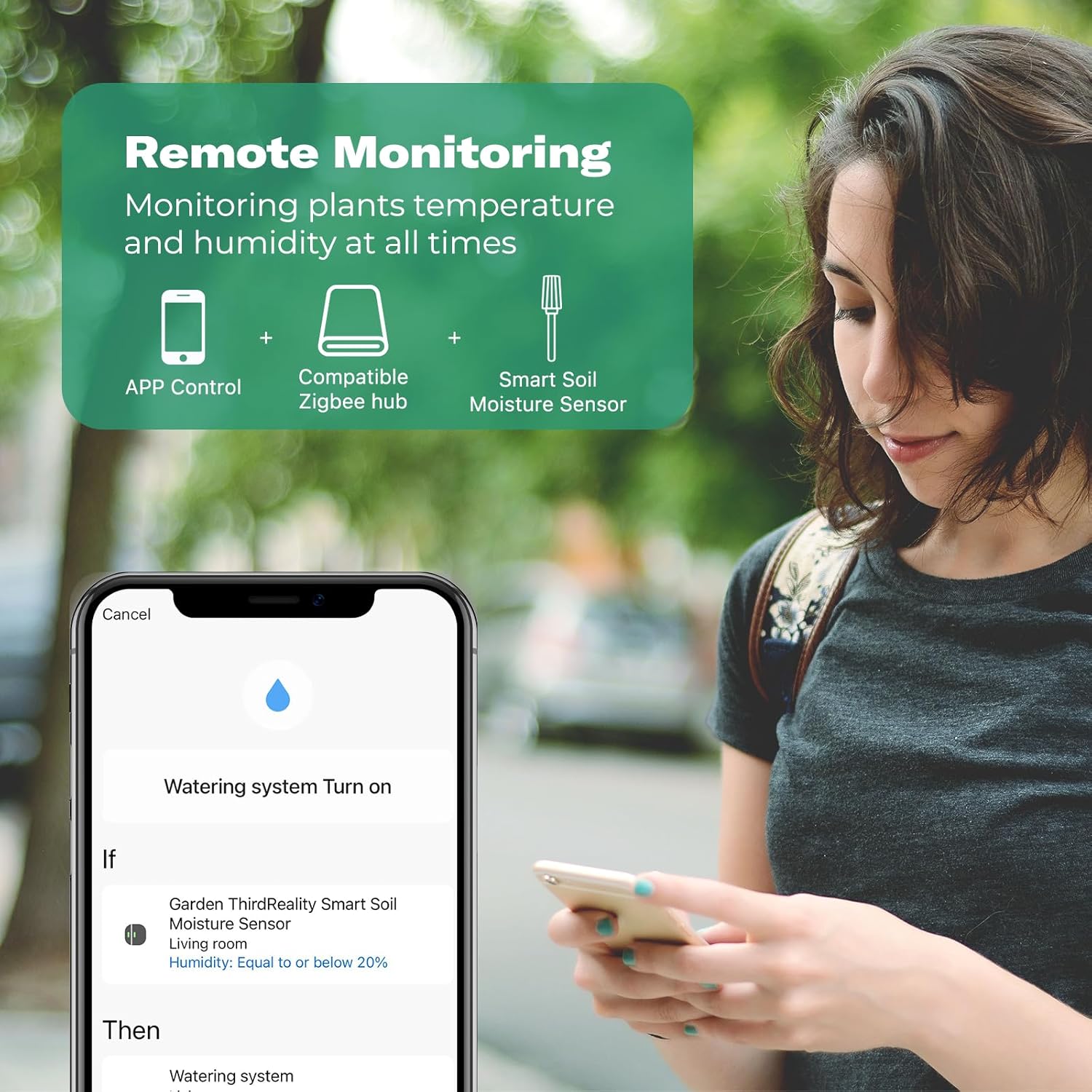
- Remote Monitoring and Automation: Receive real-time alerts on your smartphone, allowing you to take action anytime, anywhere, ensuring your plants get the right care. Integrated with smart home systems, these sensors enable automated watering schedules, so you can manage and control your garden’s irrigation remotely, saving both time and effort.
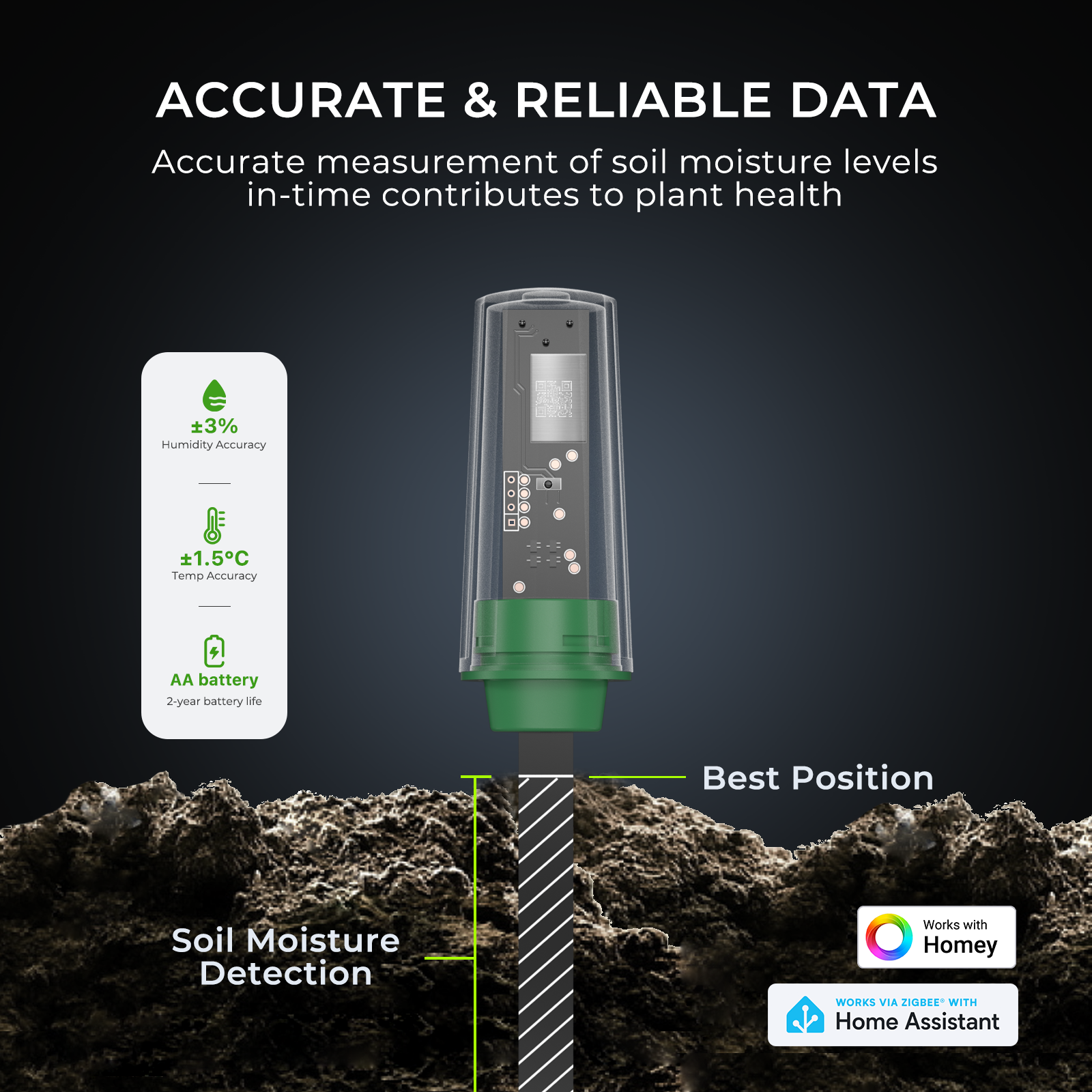
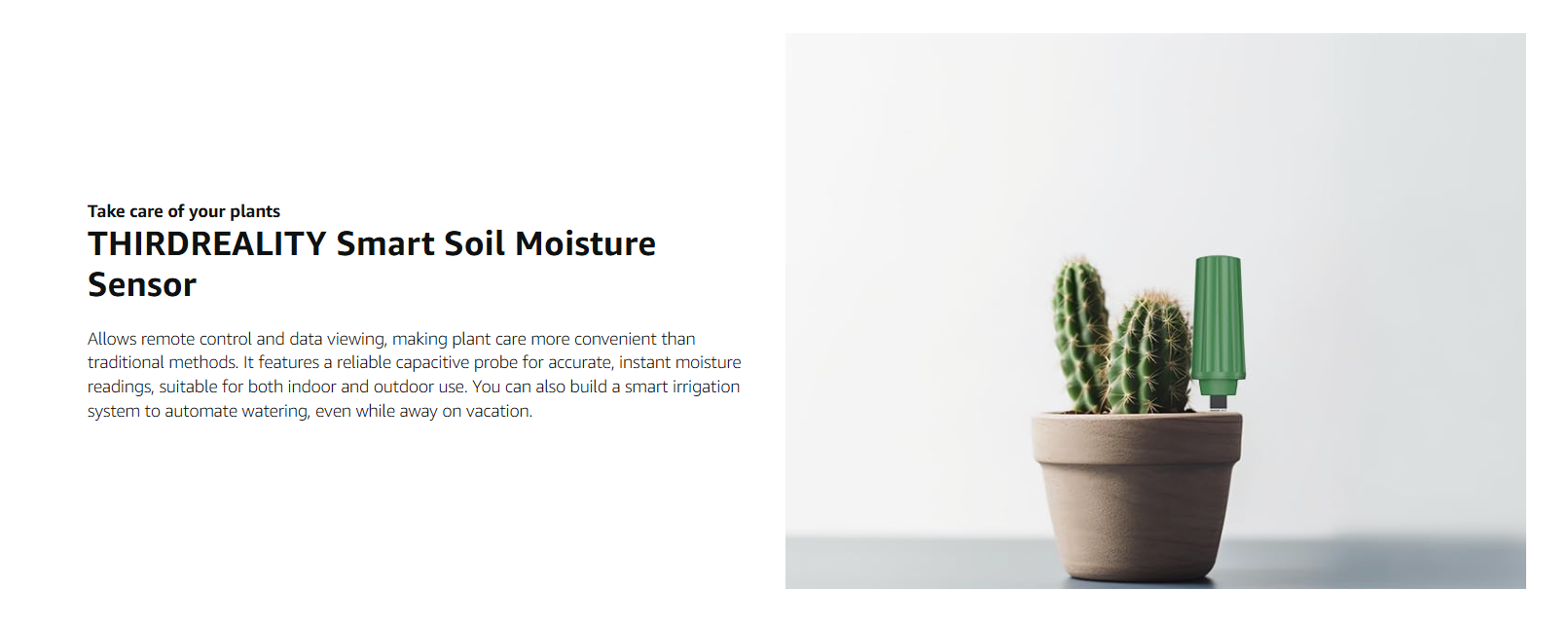
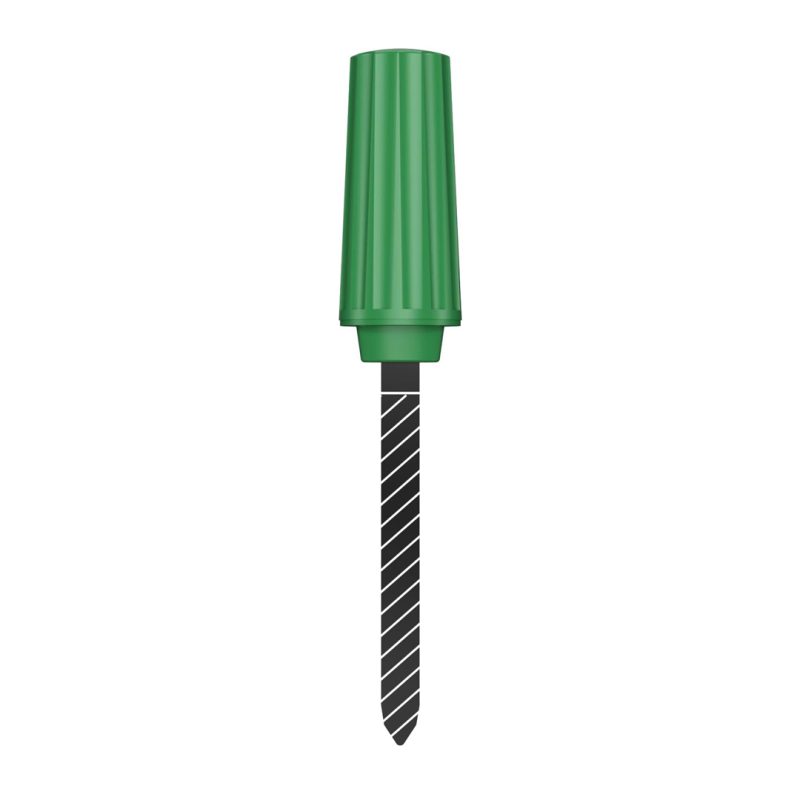
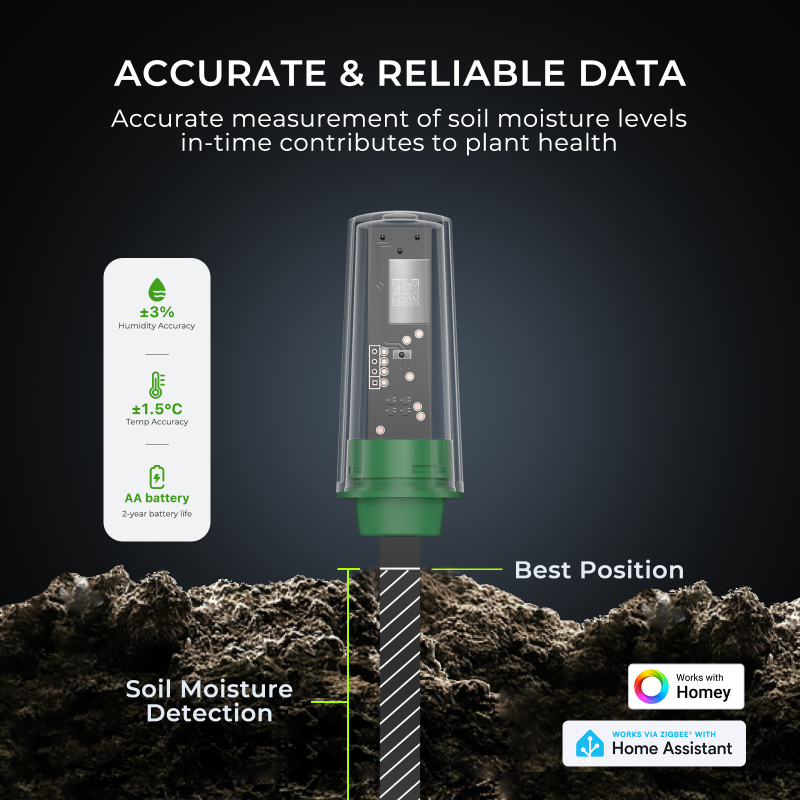
- Reliable and Accurate: Equipped with a sensing probe for instant and accurate moisture readings, this meter is suitable for most environments, ensuring your plants receive the right amount of water. Consider Zigbee’s signal range, better for indoor using.
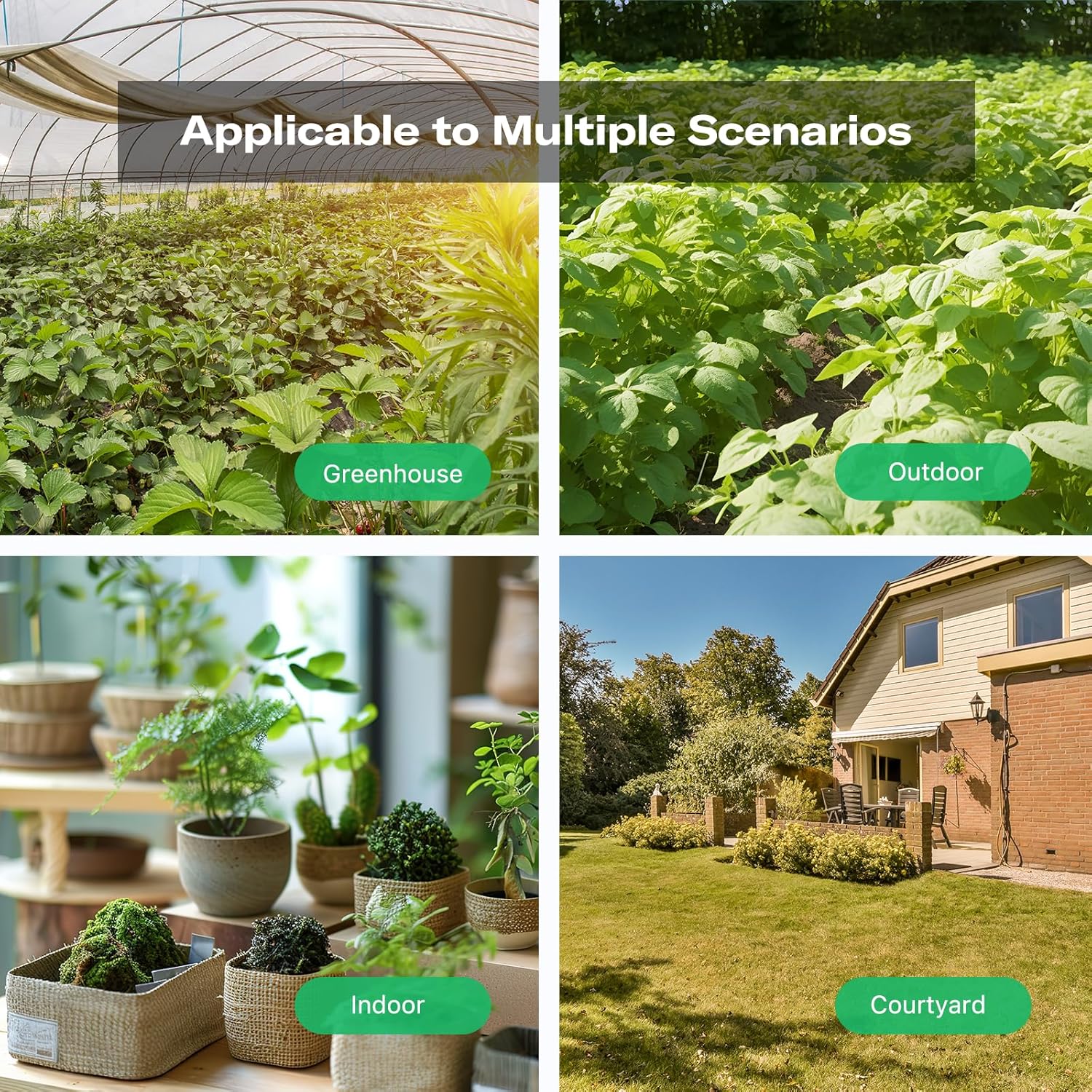
- Capacitive Monitoring: Unlike traditional probes, capacitive sensors are less affected by soil salinity and pH, offering greater durability and a longer lifespan in various soil types. Suitable for various gardening places including farms, greenhouses, nurseries, gardens, and potted plants.
- More Smart Assistant Supported: With the Smart Bridge MZ1 (sold separately), integrate with Apple Home and Google Home to monitor plants and create automation routines via an app. Additionally, it supports software OTA (Over-The-Air) updates, allowing for effortless firmware upgrades.
Product Description
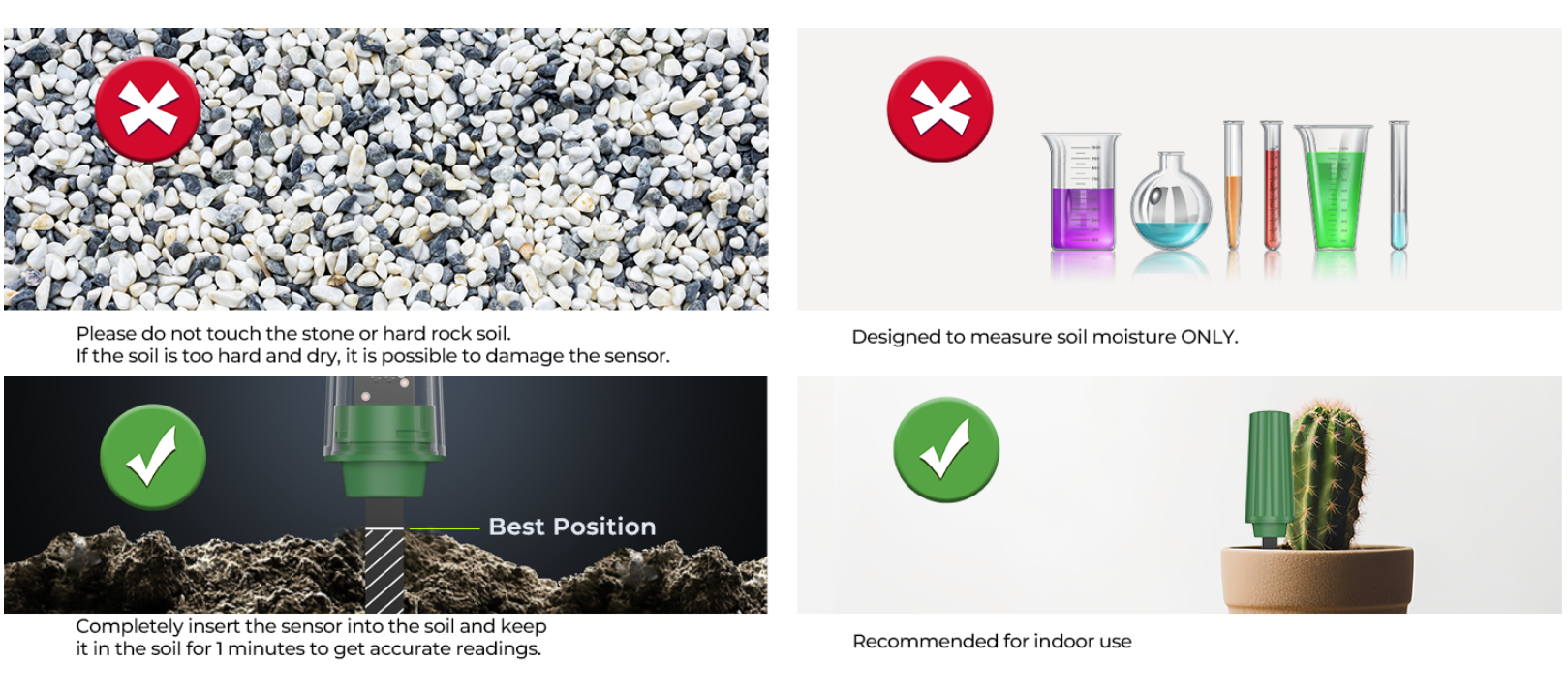
Tips
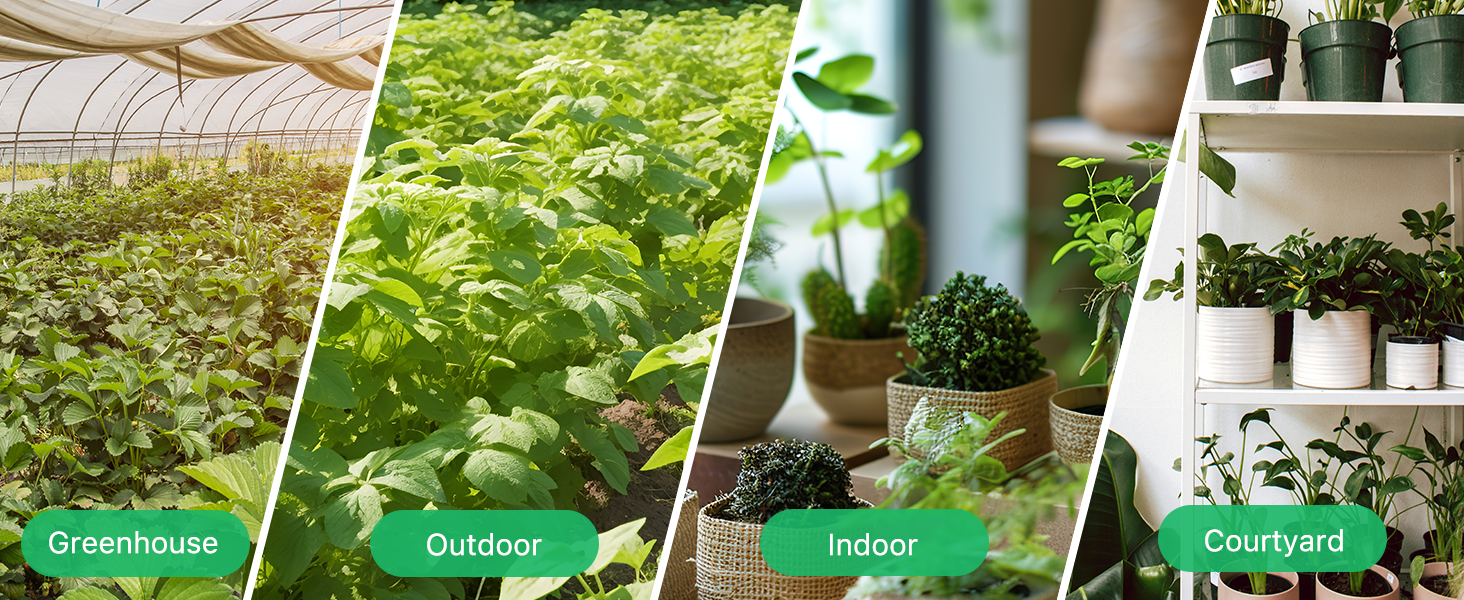
Application scenarios



steven.sadauskas –
I have 3 of these sensors working with HA/Z2M.
They were easy to pair and all 3 are reporting similar values when in the same soil so appear to be accurate and also in comparison with another brand sensor.
Only slight downsides are the range is limited if using outside and the reporting frequency seems to be every 5 minutes. Reporting once or twice an hour might help prolong battery life. Great to see the use of a AA battery here though!
Would recommend.
Nicolas R –
As with most such sensors, the usual caveats apply: Sensor placement within the pot is going to make the difference between reliable and garbage data, pay attention to trends instead of just the exact numbers, and remember that all sensors are affected by temperature.
I bought two of these to complement my Xiaomi MiFlora (Bluetooth LE) sensors, and it looks like the ThirdReality sensors being longer helps with getting a good reading for the deeper layers of soil. The main thing I find myself missing on this one is the sunlight sensor, which proved very useful in relocating my plants to places where they could get enough sunlight. I’ve yet to have the batteries die on either of my units (It’s been almost 3 months), but distance seems to play a role on the discharge rate. One sensor is within a meter of its Zigbee router (under a skylight), while the other is around 10 meters away (on my balcony), and while Home Assistant is reporting a signal strength of -45-50 dBm for both of them, the one that’s further away seems to be discharging much much faster (battery has been steadily decreasing by about 15% per month since I got it and shows 50% after 3 months, while the other is still at 100% after one month). That tells me that the sensor that’s further away might be boosting its signal to compensate for the distance or having to repeat its messages more often for the router to get it. The CR2032 batteries in the MiFlora have been lasting around 9-10 months so far, by comparison, advertizing their readings every minute instead of reporting at irregular intervals (sometimes 3 minutes, sometimes every 30 or even 15 seconds) like this one does. We’ll see how that works out.
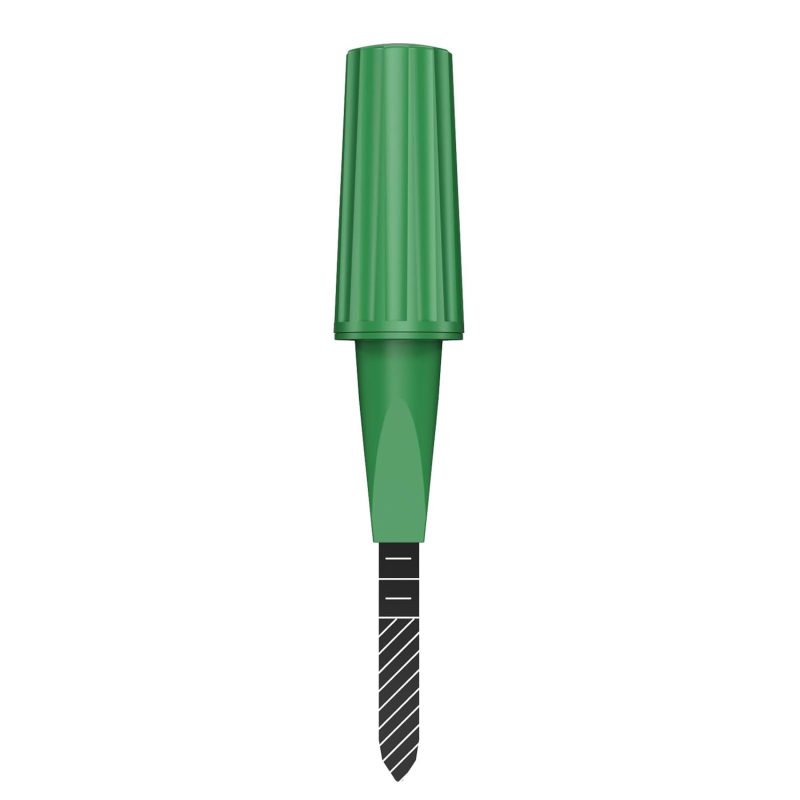
I also very much like the cap design, and how putting the seam on the underside makes it more resilient to rain and water. That’s one of the big design flaws of the MiFlora, with them having the seam on the edge of the device, meaning water will seep in and short the battery if the delicate rubber seal isn’t perfectly on. This is much better thought out.
The sensor I have outdoors was having its readings thrown off by the heat (I don’t know if the firmware could compensate for that, but it’s less severe on the MiFlora), so I put a white toilet paper cardboard roll around it to protect it from direct sunlight, which has decreased temperature by more than 5 degrees Celcius and massively improved the consistency of measurements.
Nicolas R –
Update on my previous 4 star review: The Amazon-brand “industrial” alkaline batteries (which have no capacity rating, but people seem to say are somewhere around 1500 mAh) that came with both of my sensors have since died. They both lasted 4-5 months. That is somewhat disappointing given the Bluetooth LE Xiaomi sensors managed almost double that on a CR2032 cell (which are around 235 mAh), so there’s probably a fair amount of optimization that can be done with regards to power draw. It’s not enough for me to dock another star, since the batteries on these are also *much* easier to change, but it’s something to consider.